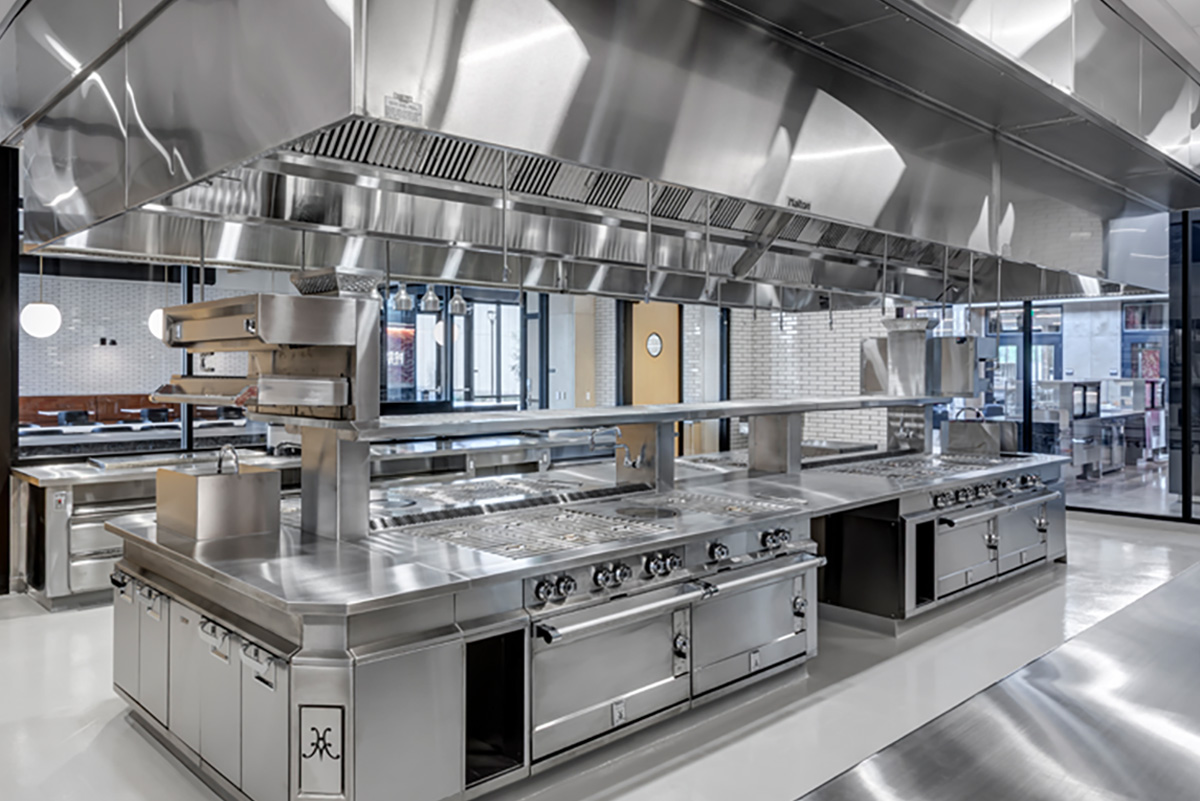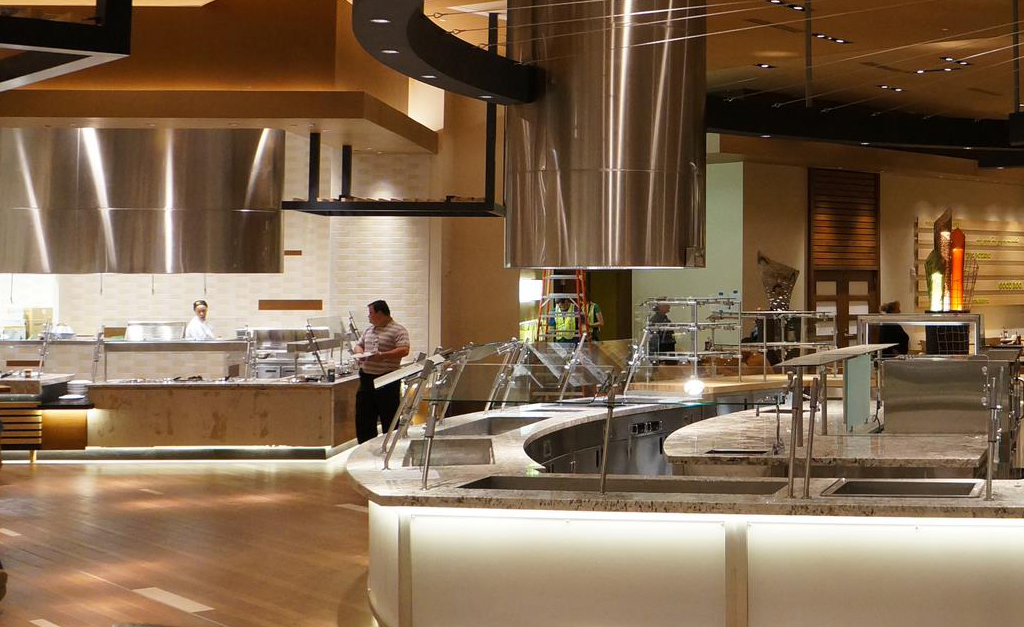
The true cost of a commercial kitchen ventilation system goes well beyond the price of the exhaust hood. The complete investment can include exhaust fans, ductwork, make-up air, HVAC requirements, controls, installation and commissioning, along with the ongoing energy, cleaning and maintenance costs required to operate the system.
This is why comparing commercial kitchen ventilation systems based on equipment price alone can be misleading.
The amount of air a hood needs to exhaust can influence the exhaust fan, ductwork, make-up air requirements, heating and cooling loads, controls and, ultimately, the amount of energy the building uses to operate the kitchen.
For restaurant chains, franchise groups and other foodservice operators, it is important to look at both sides of the investment: the initial capital cost, or CAPEX, and the ongoing operating cost, or OPEX.
A lower equipment price may save money during construction, but it does not automatically mean the ventilation system will cost less over its operating life.
What Goes Into the Initial Cost of Commercial Kitchen Ventilation?
When people think about the cost of kitchen ventilation, the exhaust hood is usually the first piece of equipment that comes to mind. In practice, the complete system can involve much more.
Depending on the project, the initial investment may include the hoods, exhaust fans, ductwork, make-up air equipment, controls, electrical work, fire suppression integration, roof curbs, installation and commissioning. The ventilation design can also affect other parts of the building’s mechanical system.
This is where exhaust airflow becomes particularly important.
Every hood has an airflow requirement based on factors such as the cooking equipment below it, appliance duty, hood type, hood geometry and the conditions around the cooking line. The objective is to provide enough exhaust to capture and contain the heat, smoke, grease and other cooking effluent produced by the appliances.
But the required airflow can vary from one hood design to another.
That difference matters because every cubic foot of air exhausted from the kitchen has to be accounted for somewhere in the building’s air balance.
Why Exhaust CFM Matters to Project Cost
Consider two hoods installed over the same cooking line. Both are capable of providing the required capture and containment, but one requires more exhaust airflow than the other.
If the difference is significant, the impact may extend beyond the hood.
More exhaust air can mean greater exhaust fan capacity and more replacement air. Depending on the project, it may also affect duct sizing and the amount of air that needs to be heated, cooled or dehumidified.
ASHRAE identifies hood selection and exhaust airflow as important commercial kitchen ventilation design decisions because of their relationship to replacement air, heat gain and loss calculations and overall energy use.
This is one reason it can be misleading to compare ventilation systems based solely on equipment price.
A less expensive hood that requires considerably more exhaust air may have consequences elsewhere in the mechanical design. A hood with a higher purchase price but a lower tested airflow requirement may, in some applications, help offset that difference through other parts of the project.
The actual impact will depend on the building, climate, HVAC strategy, operating conditions and local code requirements, so lower airflow should not automatically be treated as a guaranteed construction saving. It should, however, be part of the cost comparison.
Looking Beyond CAPEX
Once the restaurant opens, the financial conversation changes.
The ventilation system may operate for thousands of hours each year, and its ongoing costs become part of the restaurant’s operating expenses.
Those costs can include electricity for exhaust and supply fans, heating and cooling of replacement air, hood and duct cleaning, filter replacement, equipment maintenance and service.
For a single restaurant, differences in annual operating cost may or may not be large enough to influence the original equipment decision. For a chain operating dozens or hundreds of locations, those same differences can become much more significant.
This is why multi-unit operators should consider the operating cost of the ventilation system when developing or updating a restaurant prototype.
The Cost of Replacing Exhausted Air
One of the less obvious costs of kitchen ventilation is what happens to the air after it leaves the building.
A commercial kitchen can exhaust a substantial volume of air during operating hours. That air has to be replaced to maintain the building’s air balance.
Depending on how the HVAC and make-up air systems are designed, replacement air may need to be heated during colder weather, cooled during warmer weather or dehumidified before it enters the occupied space.
The cost of kitchen exhaust therefore isn’t limited to running an exhaust fan. There can also be an energy cost associated with replacing and conditioning the air being removed.
For this reason, improving capture and containment at a lower exhaust airflow can have benefits beyond fan energy alone.
The important qualification is that airflow should never simply be reduced to save energy. The hood still needs to capture the cooking plume and convective heat effectively under the conditions in which the kitchen will operate.
Capture and Containment Come First
An energy-efficient kitchen hood isn’t simply a hood with a low CFM number.
It is a hood that can achieve the required capture and containment at an appropriate airflow for the cooking application.
Cooking equipment plays a major role. A light-duty appliance does not create the same heat and effluent load as a heavy-duty charbroiler. Hood dimensions, overhang, appliance positioning and surrounding air movement can also influence performance.
Make-up air distribution is another important consideration. Poorly introduced replacement air can interfere with the thermal plume rising from the cooking equipment and make capture more difficult.
This is why airflow values should be evaluated together with the way the hood has been designed and tested.
When comparing manufacturers, ask what exhaust airflow is recommended for the actual cooking line and how that airflow was determined. Where applicable, capture and containment testing can provide useful information when comparing hood performance.
Where Demand-Controlled Kitchen Ventilation Fits
Design airflow is generally based on the conditions the kitchen needs to handle during cooking. The kitchen, however, may not operate at that level throughout the entire day.
There may be slower periods between meal services, appliances that are turned down or cooking lines that are only partially active.
A constant-volume system may continue operating at its design airflow during these periods.
Demand-controlled kitchen ventilation, or DCKV, is designed to adjust ventilation according to cooking activity. Depending on the system and application, exhaust and supply airflow can be reduced during periods of lower demand and increased as cooking activity rises.
This can reduce fan energy, but the potential benefit goes further. If less air is being exhausted, less replacement air may also need to be moved and conditioned.
Independent research has demonstrated that the savings can be meaningful. A California Energy Commission demonstration of DCKV at two foodservice locations reported ventilation energy savings of more than 50%.
That does not mean every restaurant will achieve the same result. Savings depend on factors such as operating hours, cooking patterns, climate, utility rates, system design and how much time the kitchen spends below peak cooking demand. For a restaurant operating long hours with changing cooking loads, however, DCKV is worth including in a lifecycle cost analysis rather than evaluating it only as an additional upfront expense.
Why This Matters for Chain Restaurants
The economics become particularly interesting when the same ventilation design is repeated across a restaurant portfolio.
A design decision that has a relatively small impact at one location can have a much larger financial effect when repeated across 50, 100 or 500 restaurants.
For example, reducing the required exhaust airflow in a restaurant prototype may influence mechanical equipment requirements at each future location. Reducing ventilation energy consumption can create recurring savings every year the restaurants operate.
This is also why chain restaurant teams benefit from involving ventilation manufacturers and mechanical engineers early in prototype development.
Instead of selecting the hood after most of the mechanical design has already been established, the team can look at the cooking equipment, exhaust requirements, make-up air strategy, HVAC system and controls together.
That gives the design and construction teams a better opportunity to understand where the real costs are and where changes could have the greatest impact.
Be Careful When Value Engineering Kitchen Ventilation
Commercial kitchen ventilation often comes under review during value engineering, particularly when a project is over budget.
There is nothing wrong with looking for a more economical solution. The important part is making sure the complete system is being compared.
If one hood has a lower purchase price but requires more exhaust airflow, the mechanical engineer should determine whether that change affects the exhaust fan, make-up air, HVAC equipment, ductwork or other parts of the project.
The same principle applies to controls and demand-controlled ventilation. Removing these features may reduce the initial equipment cost, but the potential increase in operating costs should also be considered.
True value engineering should reduce project cost without creating unnecessary costs elsewhere or compromising the required ventilation performance.
What Should You Compare Between Ventilation Systems?
Before making a decision based on price, ask each manufacturer to provide enough information to compare the systems on an equivalent basis.
Start with the exhaust airflow required for the actual cooking equipment. Understand how the hood achieves capture and containment and whether its performance has been independently tested.
Then look at what that airflow means for the rest of the project, including exhaust fan capacity, make-up air, heating and cooling requirements and controls.
For projects considering DCKV, ask how the system determines cooking demand and how exhaust and supply airflow are controlled when cooking activity changes.
Maintenance should also be part of the discussion. Filters, controls, sensors and other system components may have different cleaning and service requirements, which can affect long-term operating costs.
Finally, look at the expected operating hours of the kitchen. A ventilation technology that produces modest savings in a kitchen operating eight hours per day may have a very different payback in a facility operating 16 or 20 hours per day.
The Lowest Purchase Price Isn’t Always the Lowest Cost
There is no single ventilation solution that will provide the lowest total cost for every commercial kitchen.
A small independent restaurant, a university dining facility, a hotel, a QSR and a restaurant chain with hundreds of locations can have very different priorities and operating profiles.
What they have in common is that the cost of kitchen ventilation extends beyond the exhaust hood.
Airflow affects the rest of the mechanical system. The mechanical system affects construction cost. And once the kitchen is operating, airflow, controls and HVAC requirements influence how much energy the building uses.
That is why a better commercial kitchen ventilation comparison considers both CAPEX and OPEX, along with the performance required for the cooking application.
Before choosing the lowest-priced option, look at what the complete system requires to install, operate and maintain.
The difference between the lowest purchase price and the lowest total cost can be worth understanding.