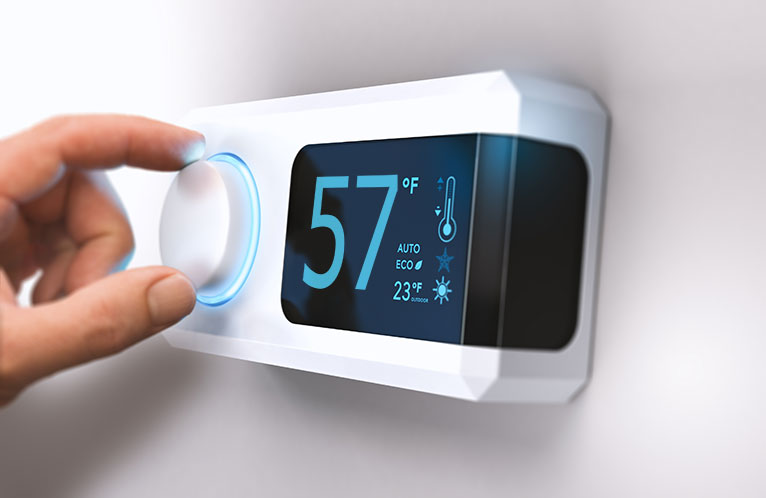
Engineers will typically design for a supply air temperature at 10 degrees above traditional occupied spaces outside of the kitchen. Supply air is usually brought into an occupied space at 57°F/14°C off the coil to mix with room air to maintain a specified space temperature at design conditions. In a kitchen, due to the air exchange rate (how fast the room air is removed and replaced in an hour), the temperature would be higher since the primary concern is not on occupant comfort for make up air, but tempering it and removing latent load (moisture). In some instances you will see the temperature at “space neutral”, basically bringing the air in at the same temperature as the ambient condition in the space. This should be looked at closely so you can determine if you are adding moisture to the space from outside air not fully condensed.
Some rules of thumb: At a minimum, the make up air should be at the moisture and temperature level of the space design conditions so as not to add any additional cooling or de-humidification requirements.
Supply air must be introduced into the kitchen in an amount and condition capable of meeting the combined load in the space. The load includes radiant load (think of the sun’s rays) from appliances under the hood as well as other internal loads (refrigeration, people, etc) and external loads (walls, roof, windows etc)
Frequently Asked Questions
Commercial kitchen supply or make-up air is typically introduced between 65°F and 75°F (18°C–24°C), depending on climate conditions, kitchen heat load, cooking equipment, and occupant comfort requirements. The goal is to provide conditioned air that supports employee comfort without creating drafts or negatively affecting hood capture and containment performance. Proper airflow distribution and heat-load-based design are critical to achieving balanced kitchen conditions.
Yes. Poorly designed supply air systems can create uncomfortable drafts for kitchen staff, particularly near prep stations, serving lines, or hood perimeters. Air that is introduced too cold, too fast, or in the wrong location may disrupt the natural thermal plume rising from cooking equipment and reduce ventilation effectiveness. Ventilation systems should be engineered to help minimize drafts by carefully coordinating supply air temperature, velocity, and air distribution strategy to support both employee comfort and capture performance.
Make-up air plays a major role in maintaining a comfortable and balanced kitchen environment. Commercial kitchens exhaust large volumes of air, and that air must be properly replaced to maintain building pressure and indoor air quality. If make-up air is not correctly designed, kitchens may experience hot and cold spots, excessive humidity, drafts, or pressure imbalance issues. Your kitchen ventilation system should be designed to help optimize airflow balance while supporting comfort, ventilation performance, and energy efficiency.
In many applications, introducing a portion of supply air through or near the hood can help improve airflow management and kitchen comfort when properly engineered. However, supply air must be carefully designed so it does not interfere with capture and containment performance. Airflow distribution should always support the natural movement of heat, smoke, and grease toward the exhaust hood. Technologies such as Capture Jet™ have been specifically engineered to enhance capture performance while reducing the required exhaust airflow rate.
Commercial kitchen ventilation systems significantly impact HVAC energy use because exhausted air must typically be replaced with conditioned make-up air. High exhaust airflow rates can increase heating and cooling demand throughout the building. Some manufacturers, such as Halton, approach kitchen ventilation using a heat-load-based design philosophy, combined with technologies such as Capture Jet™ and M.A.R.V.E.L. Demand Controlled Kitchen Ventilation, to help reduce unnecessary airflow and optimize ventilation performance based on actual cooking activity. This can help lower HVAC loads, reduce energy consumption, and improve overall operational efficiency.